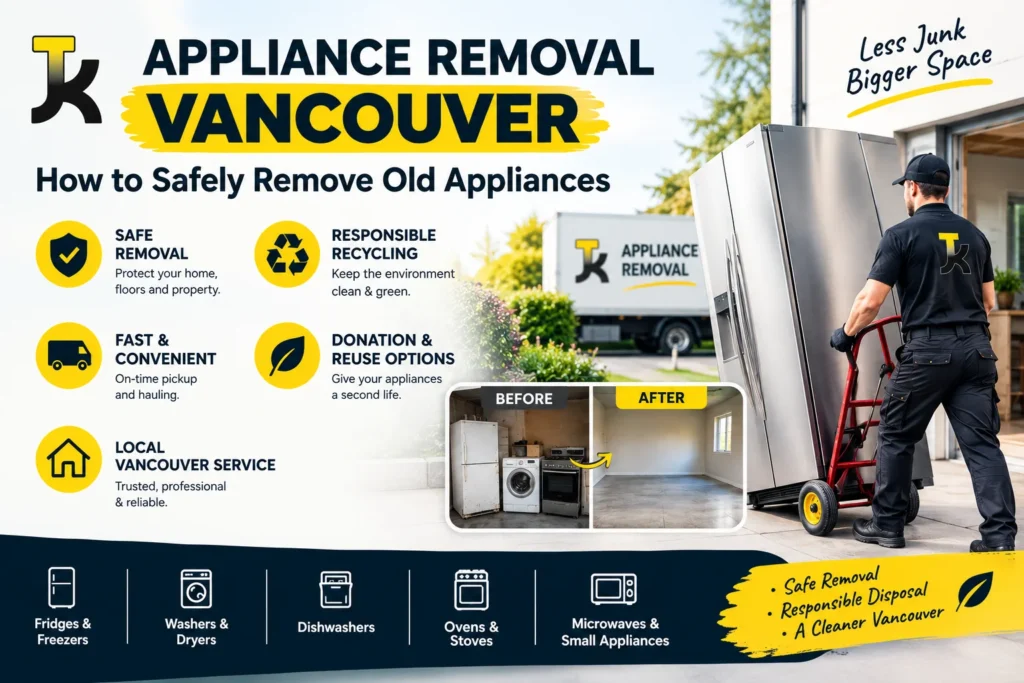
Old refrigerators, washers, dryers, stoves, dishwashers, and other appliances can be difficult to move because of their size, weight, utility connections, and limited access. Safe appliance removal requires proper preparation before lifting, loading, transporting, recycling, or disposing of the item. This guide explains how to prepare old appliances, where they can go after removal, what affects appliance removal costs, and when professional appliance removal may be the safer option in Vancouver.
What Is Appliance Removal?
Appliance removal is the process of taking unwanted or broken household appliances out of a home, business, garage, basement, or other property and transporting them to an appropriate destination. Depending on the condition of the appliance, that destination may be a recycling centre, donation facility, waste facility, retailer, or reuse program.
Common items include refrigerators, freezers, washing machines, dryers, dishwashers, ovens, stoves, microwaves, and other bulky household equipment. Appliance removal service providers may handle the lifting and transportation, while junk appliance removal focuses on unwanted appliances that need to be hauled away.
Appliance removal and disposal are not always the same. Removal describes taking the item from your property, while disposal refers to what happens afterwards. Responsible disposal of old appliances may involve recycling, reuse, donation, or regulated waste processing.
When Should You Consider Appliance Removal?
Consider appliance removal when an appliance is broken, outdated, being replaced, too large to move, or no longer needed.
When an Appliance No Longer Works:
A broken appliance that cannot be repaired may take up valuable space and become difficult to manage. Instead of leaving it in a garage or storage area, consider old fridge removal or professional pickup if the appliance is too heavy to move safely.
When Replacing an Old Appliance:
Buying a new refrigerator, washer, dryer, or stove often leaves you with an unwanted older model. Arranging pickup of old appliances at the same time as replacement can make the transition easier.
When Moving or Renovating Your Home:
Renovations and relocations often uncover appliances that are damaged, outdated, or no longer needed. Removing them before construction begins can create more usable space and reduce obstacles around the property.
When an Appliance Is Too Large to Handle Yourself:
Large appliances can weigh hundreds of pounds and may be awkward to move through narrow doors or stairs. If you do not have suitable equipment or help, professional removal can reduce the risk of injury and property damage.
Which Appliances Can Be Removed?
Consider appliance removal when an appliance is broken, outdated, being replaced, too large to move, or no longer needed.
Refrigerator and Freezer Removal;
Refrigerators and freezers require special consideration because some models contain refrigerants and other components that should be handled through appropriate recycling or waste channels. Refrigerator removal may include moving the unit from its current location, loading it safely, and taking it to an approved facility.
If you are researching refrigerator disposal or fridge disposal, check local requirements before placing the appliance outside or in regular garbage.
Washing Machine and Dryer Removal:
Washing machines and dryers are heavy and difficult to carry without proper equipment. Washing machine disposal should be arranged through a facility or service that accepts large appliances. Water, electricity, or gas connections should be disconnected correctly before moving the equipment.
Dishwasher Removal:
Dishwashers are often connected to water, drainage, and electrical systems beneath countertops. They may also be tightly fitted into cabinets, so careful removal helps prevent damage to surrounding cabinetry and flooring.
Oven and Stove Removal:
Gas and electric stoves require different handling. Electrical appliances must be safely disconnected, while gas appliances should only have gas connections handled by an appropriately qualified professional where required.
Microwave and Small Appliance Removal:
Small appliances may be easier to transport, but their disposal requirements can still differ from ordinary household garbage. Always check local rules before deciding whether can i put small appliances in the trash or whether recycling is required.
How to Remove an Appliance Safely:
Safe removal of appliance begins before the item is lifted.
Disconnect the Appliance From Power:
Unplug electrical appliances when it is safe to do so. Do not pull on power cords or attempt electrical repairs simply to make an appliance easier to remove.
Shut Off Water or Gas Connections:
Washers and dishwashers may have water connections, while some dryers, ovens, and stoves may use gas. Gas connections should not be disconnected by someone without the necessary skills or authorization.
Prepare the Appliance for Moving:
Empty shelves, drawers, drums, and compartments. Secure doors and loose components so they do not swing open during transportation.
Protect Floors, Walls, and Doorways:
Use suitable moving blankets, floor protection, and padding where appropriate. Measure the appliance and access route before moving it through tight spaces.
Use Proper Equipment for Heavy Appliances:
Appliance dollies, straps, ramps, and multiple workers can make heavy-item handling safer. Avoid attempting to carry a large appliance alone, especially on stairs.
Where Can You Take Old Appliances?
Once the appliance has been removed, you need to determine where it can legally and responsibly go.
Appliance Recycling Centres:
Recycling facilities may accept refrigerators, washers, dryers, and other appliances. Searching for appliances recycle near me can help identify nearby facilities, but confirm accepted items before making a trip.
Local Waste Facilities:
Municipal transfer stations and waste facilities may accept large appliances under specific rules. Some charge separate disposal fees or require appointments.
Manufacturer or Retailer Take-Back Programs;
Some manufacturers and retailers offer take-back or haul-away options when customers purchase replacement appliances. Availability depends on the company and location.
Donation or Reuse Options:
If an appliance still works safely, donation or reuse may be possible. This is also why people often ask, can you donate appliances? Local charities, reuse centres, and community organizations may have different acceptance requirements.
Professional Junk Removal Services:
A professional appliance hauling service can collect unwanted appliances from your property and transport them to appropriate disposal or recycling facilities. An experienced appliance removal company can also help with bulky or difficult-to-access items.
Can Old Appliances Be Recycled?
Yes, many appliances contain materials that can be recovered and reused. Common recyclable materials include steel, aluminium, copper, certain plastics, glass, and electronic components.
If you are learning how to recycle appliances, start by identifying the appliance and checking which local facility accepts it. Household appliances recycling may require different procedures depending on the item.
Refrigerators and freezers need additional attention because refrigerants and other components may require technical handling. This is particularly relevant when arranging appliance recycling Vancouver BC, or similar local services.
Responsible recycling reduces the amount of bulky waste sent to landfills and allows useful materials to enter manufacturing streams again. It also helps prevent potentially harmful components from being handled incorrectly.
How Much Does Appliance Removal Cost?
The price of appliance removal depends on several practical factors. If you are requesting a large item removal quote, a provider may consider:
- Number of appliances being removed
- Appliance size and weight
- Labour required for lifting
- Distance and transportation requirements
- Stairs, narrow hallways, or difficult access
- Recycling or disposal charges
- Local facility fees
- Same-day or emergency service
A large item removal estimate may be more accurate when you provide the number, type, size, and location of appliances. Some providers advertise free appliance removal or appliance removal for free, but these offers may have eligibility requirements. Always confirm what is included before booking.
DIY Appliance Removal vs. Professional Removal:
| Factor | DIY Removal | Professional Removal |
| Heavy lifting | Homeowner handles it | Crew handles it |
| Transportation | Must be arranged | Usually included |
| Safety | Higher physical risk | Trained workers |
| Disposal | You arrange disposal | Often handled for you |
| Recycling | Requires research | May be included |
| Convenience | More time-consuming | More convenient |
Professional large junk removal service providers can be useful when an appliance is unusually heavy, access is difficult, or several items need to be removed at once.
What Should You Do Before Appliance Removal?
Before appliance removal, prepare the appliance, disconnect utilities safely, check access routes, and confirm local disposal or recycling requirements.
Empty and Clean the Appliance:
Remove food, clothing, dishes, water, and other contents. Cleaning the appliance can also make handling easier.
Remove Personal Items:
Check every drawer, shelf, compartment, and storage area. Small belongings are easy to overlook during a move.
Disconnect Utilities Properly:
Confirm that electricity, water, and gas connections have been safely disconnected. For gas appliances, use a qualified professional when required.
Measure Doorways and Access Routes:
Measure the appliance and compare it with doors, hallways, stairways, gates, and other access points. This can prevent problems on removal day.
Check Local Disposal Requirements:
Before searching for where can I recycle my old fridge, verify whether the local facility accepts refrigerators, freezers, or other large appliances and whether special preparation is required.
Common Mistakes to Avoid During Appliance Removal:
One common mistake is leaving an appliance on the curb without checking local collection rules. Another is trying to move a heavy appliance without assistance or proper equipment.
Improperly disconnecting gas or water lines can create safety problems. It is also important not to mix recyclable appliances with regular garbage when local rules provide separate recycling options.
People sometimes forget disposal fees, weight restrictions, appointment requirements, or facility limitations. In areas with specific requirements for oversized waste removal Vancouver, checking local guidelines before moving the appliance can save time and additional costs.
Frequently Asked Questions:
How do I remove an old appliance?
Empty the appliance, disconnect utilities safely, measure the access route, and use suitable moving equipment. For heavy or connected appliances, professional help may be safer.
Where can I dispose of large appliances?
Large appliances may be accepted by recycling centres, municipal waste facilities, retailers, manufacturers, donation programs, or professional removal providers.
Can appliances go in regular garbage?
Some small appliances may be accepted under local garbage rules, but large appliances often have separate collection, recycling, or disposal requirements. Check local regulations first.
Can old appliances be recycled?
Yes. Many appliances contain recyclable metals, plastics, glass, wiring, and electronic components. Refrigerators and freezers may require expert handling.
How much does appliance removal cost?
Costs depend on the appliance type, quantity, weight, accessibility, labour, transportation, and disposal or recycling fees.
Who removes unwanted appliances?
A professional appliance removal contractor, junk removal provider, recycling service, retailer, or municipal collection program may remove unwanted appliances.
Can someone pick up an old appliance from my home?
Yes. Fridge pick up, appliance collection, and professional large item pickup services may be available depending on your location. People searching for who will pick up my old refrigerator should confirm whether the service includes labour, transportation, recycling, and disposal.
Choose a Safe and Responsible Appliance Removal Option
The right removal of appliance approach depends on the appliance type, condition, size, access, and local disposal rules. Whether you need free old appliance pickup, appliance pick up free, or a paid service, confirm exactly what happens after collection.
A professional provider can handle lifting, transportation, appliance waste removal, recycling, and disposal while helping reduce the physical work involved. For homeowners, landlords, and businesses needing commercial appliance removal Vancouver, choosing a responsible large item hauling and disposal Vancouver option can make the entire process safer and more convenient.